
No products in the cart.
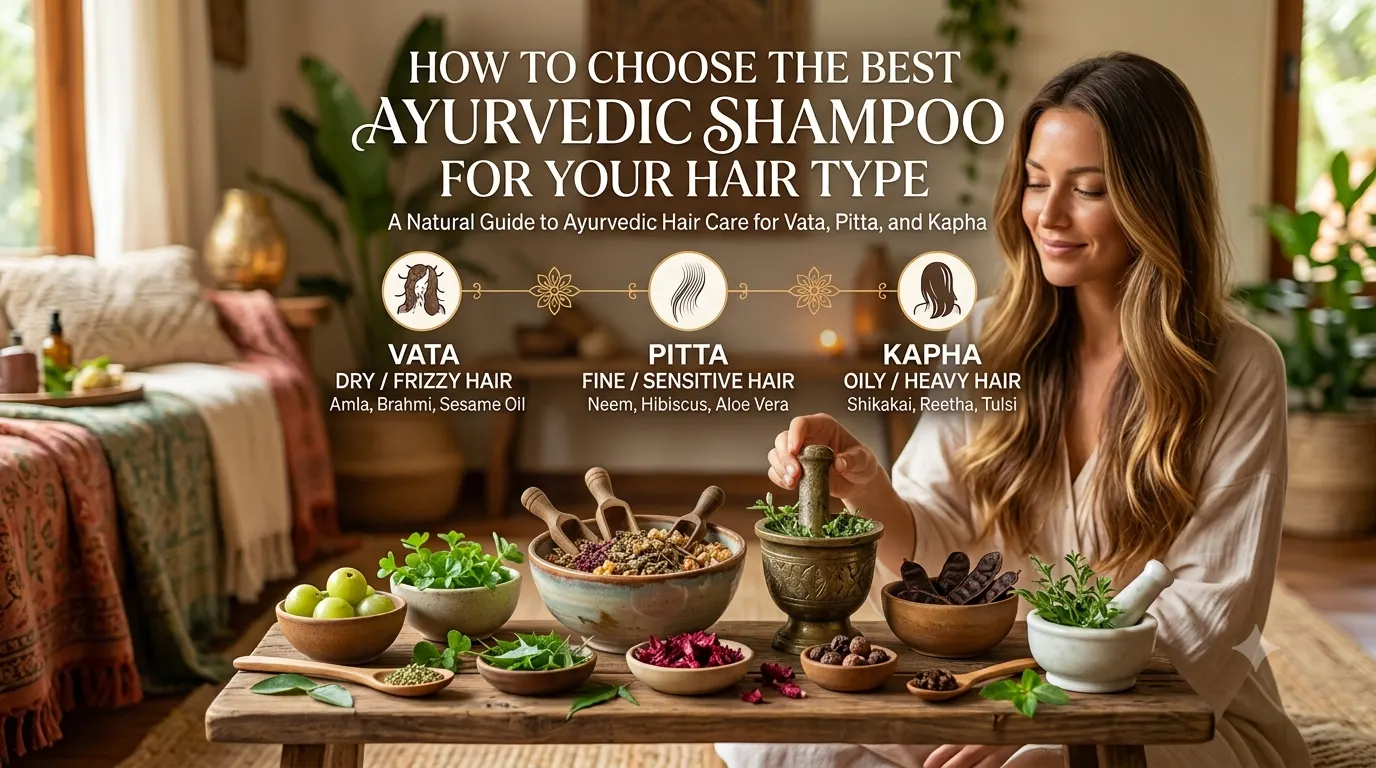
How to Choose the Best Ayurvedic Shampoo for Your Hair Type
Choosing the Best Ayurvedic Shampoo for your hair is not simply about picking a product with a long list of herbs on the label. Your hair type, scalp condition, daily routine, and specific hair concerns all play an important role in deciding which shampoo is suitable for you. A shampoo that works well for oily hair may not provide the same results for dry or frizzy hair.
Ayurvedic hair care focuses on using plant-based ingredients and traditional herbal practices to support healthy-looking hair and a balanced scalp. Ingredients such as neem, aloe vera, amla, bhringraj, shikakai, hibiscus, and other botanical extracts are commonly associated with Ayurvedic hair care routines.
However, the Best Ayurvedic Shampoo is different for everyone. If your scalp becomes oily quickly, you may need a lightweight cleansing formula. If your hair feels dry or rough, a moisturizing herbal shampoo may be more appropriate. For people dealing with dandruff, buildup, or an irritated scalp, ingredient selection becomes even more important.
In this guide, we will explain how to choose an Ayurvedic shampoo according to your hair type, what ingredients to look for, common mistakes to avoid, and how to build a simple herbal hair care routine with products such as Selphira.
What Is an Ayurvedic Shampoo?
An Ayurvedic shampoo is a hair-cleansing product inspired by the principles and ingredients traditionally used in Ayurveda and herbal hair care.
Unlike conventional shampoos that may focus primarily on cleansing and cosmetic effects, Ayurvedic formulations often combine cleansing agents with botanical ingredients intended to support the overall appearance and condition of the hair and scalp.
Common Ayurvedic and herbal hair care ingredients include:
- Neem – traditionally used in scalp-focused herbal care
- Amla – commonly used in traditional Indian hair care
- Bhringraj – a popular Ayurvedic hair-care herb
- Shikakai – traditionally used as a gentle cleansing herb
- Aloe vera – commonly included in soothing and moisturizing formulas
- Hibiscus – frequently used in traditional hair care
- Fenugreek – often used in herbal hair treatments
It is important to remember that “Ayurvedic” does not automatically mean that a shampoo will be suitable for every person. The complete formula and your individual hair needs matter.
How to Choose the Best Ayurvedic Shampoo
The first step toward finding the Best Ayurvedic Shampoo is identifying your hair and scalp type.
Your scalp produces natural oil called sebum. Some people naturally have oilier scalps, while others have dry or sensitive scalps. Your hair lengths can also have different needs from your scalp.
Before buying a shampoo, consider:
- Is your scalp oily or dry?
- Does your hair feel rough after washing?
- Do you experience visible flakes?
- Is your hair prone to frizz?
- Do you frequently use heat-styling tools?
- Do you color or chemically treat your hair?
- How frequently do you wash your hair?
Once you understand these factors, selecting an appropriate herbal shampoo becomes much easier.
Best Ayurvedic Shampoo for Oily Hair
Oily hair usually results from excess sebum production on the scalp. Hair can start looking greasy shortly after washing, particularly around the roots.
For oily hair, look for an Ayurvedic shampoo that provides effective cleansing without leaving excessive residue.
Ingredients to Consider
Herbal ingredients such as neem and other scalp-cleansing botanicals are commonly found in formulations designed for oily scalp care.
A lightweight formula can help your hair feel clean without making the roots unnecessarily heavy.
What to Avoid
If you have an oily scalp, avoid choosing a shampoo simply because it contains many moisturizing ingredients. Very heavy formulas may make the roots feel greasy faster.
Also avoid washing your hair aggressively or repeatedly in an attempt to remove every trace of oil. Excessive cleansing may leave the scalp feeling uncomfortable.
Best Ayurvedic Shampoo for Dry Hair
Dry hair often feels rough, dull, brittle, or difficult to manage. The scalp may also feel tight or uncomfortable.
For dry hair, your priority should be gentle cleansing and maintaining moisture in the hair lengths.
Ingredients to Look For
Look for formulas containing ingredients commonly associated with moisturizing and soothing hair care, such as:
- Aloe vera
- Hibiscus
- Amla
- Botanical oils
- Gentle herbal extracts
A moisturizing conditioner can also be an important part of a dry-hair routine because shampoo primarily cleanses the scalp and hair.
Hair Washing Tip
Avoid using very hot water when washing dry hair. Lukewarm or cooler water is generally more comfortable for the scalp and can help your hair feel less dry after washing.
Best Ayurvedic Shampoo for Dandruff-Prone Scalp
Flaking can have several causes, including dandruff, dry skin, product buildup, and certain scalp conditions. Therefore, it is important not to assume that every type of flaking is simply dryness.
For a dandruff-prone scalp, consider a shampoo formulated specifically for scalp cleansing and dandruff care.
Look at the Complete Formula
Ingredients such as neem are traditionally popular in Ayurvedic scalp care. However, the effectiveness of a shampoo depends on the complete formulation, concentration, usage, and individual response.
If persistent itching, redness, thick scaling, or significant scalp irritation occurs, consider consulting a dermatologist rather than relying only on a cosmetic shampoo.
Best Ayurvedic Shampoo for Frizzy Hair
Frizzy hair often needs better moisture management and gentle cleansing.
Frequent heat styling, humidity, chemical treatments, rough towel drying, and excessive washing can contribute to a frizzy appearance.
For frizzy hair, choose an Ayurvedic or herbal shampoo that does not leave your hair feeling excessively stripped after washing.
Build a Complete Routine
Shampoo alone may not solve every hair concern. A simple routine can include:
- Gentle shampoo
- Conditioner after washing
- Weekly hair-care treatment if suitable
- Limited heat styling
- Gentle detangling
- Regular trimming of damaged ends
This approach is often more practical than constantly switching shampoos.
Best Ayurvedic Shampoo for Normal Hair
If your scalp is neither excessively oily nor particularly dry, you have more flexibility when choosing an Ayurvedic shampoo.
A balanced herbal shampoo can be used as part of a regular cleansing routine.
Instead of selecting a product based only on marketing claims, check:
- Ingredient list
- Hair-care purpose
- Product instructions
- Suitability for your scalp
- How your hair responds after several washes
A shampoo does not need to contain every popular Ayurvedic herb to be a useful addition to your routine.
Best Ayurvedic Shampoo for Hair Fall Concerns
Hair fall can happen for many different reasons, including stress, nutritional deficiencies, hormonal changes, illness, genetics, scalp conditions, and hair damage.
Because the underlying cause matters, a shampoo should not be considered a complete solution for unexplained or persistent hair loss.
An Ayurvedic shampoo can be included in a gentle hair-care routine, particularly when the goal is to keep the scalp and hair clean without excessive dryness.
For ongoing or significant hair shedding, professional medical advice can help identify the underlying cause.
Key Ayurvedic Ingredients to Look For
Understanding ingredients can make it easier to identify the Best Ayurvedic Shampoo for your routine.
Neem
Neem is one of the most recognized herbs in traditional Indian personal care. It is commonly used in scalp-focused formulations.
Amla
Amla is traditionally associated with Indian hair care and is commonly included in herbal shampoos, oils, and hair treatments.
Bhringraj
Bhringraj has a long history of use in Ayurvedic hair-care traditions and is frequently found in herbal hair products.
Shikakai
Shikakai has traditionally been used as a natural hair cleanser. It is especially well known in traditional Indian hair-washing practices.
Aloe Vera
Aloe vera is commonly used in personal-care products for its soothing and moisturizing properties.
Hibiscus
Hibiscus is another popular botanical used in traditional hair-care routines and herbal formulations.
Why Your Scalp Type Matters More Than Your Hair Length
Many people choose shampoo according to whether their hair is long, short, curly, or straight. While hair texture matters, the scalp is usually the primary area that shampoo needs to cleanse.
For example, you can have:
- An oily scalp with dry hair ends
- A dry scalp with thick hair
- An oily scalp with fine hair
- A normal scalp with chemically treated hair
This means two people with the same hair length may need completely different shampoos.
When searching for the Best Ayurvedic Shampoo, think about your scalp first and hair texture second.
How Often Should You Use Ayurvedic Shampoo?
There is no single washing schedule that works for everyone.
Your ideal frequency depends on:
- Scalp oil production
- Exercise and sweating
- Climate
- Hair texture
- Product buildup
- Styling habits
- Personal preference
Someone with an oily scalp may need more frequent cleansing than someone with dry, textured hair.
The important point is to avoid choosing a washing schedule simply because it works for someone else.
Common Mistakes When Choosing an Ayurvedic Shampoo
Even when looking for the Best Ayurvedic Shampoo, consumers often make a few common mistakes.
Choosing a Product Only Because It Says “Natural”
Natural ingredients can be valuable, but natural does not automatically mean suitable for every scalp.
Always consider the complete ingredient list and your personal requirements.
Switching Products Too Frequently
Changing shampoos every few days makes it difficult to understand whether a product is actually suitable for your hair.
Give your routine enough consistency to evaluate how your scalp and hair respond.
Ignoring the Scalp
Hair products are often selected based on hair length and texture while the scalp is overlooked.
Remember that shampoo is primarily a cleansing product for the scalp.
Expecting Shampoo to Fix Every Hair Problem
Shampoo is only one part of hair care. Hair health can also be affected by diet, lifestyle, genetics, stress, styling, chemical treatments, and medical conditions.
How to Use Ayurvedic Shampoo Correctly
Even the Best Ayurvedic Shampoo needs to be used correctly.
Follow these simple steps:
- Wet your hair thoroughly with lukewarm water.
- Take an appropriate amount of shampoo.
- Apply it mainly to the scalp and roots.
- Massage gently using your fingertips.
- Avoid aggressively scratching the scalp.
- Rinse thoroughly.
- Apply conditioner to the lengths if needed.
- Rinse again and gently dry your hair.
Do not use excessive shampoo simply because you want a deeper clean. More product does not necessarily mean better cleansing.
How Selphira Can Fit Into an Ayurvedic Hair-Care Routine
Selphira can be considered when exploring herbal and Ayurvedic-inspired personal-care options for your hair routine.
When selecting a Selphira shampoo or any herbal shampoo, focus on the product’s ingredients and intended use rather than choosing solely based on the word “Ayurvedic.”
A practical approach is to match the formulation with your specific concern, whether that is scalp cleansing, dryness, roughness, or general hair care.
“Explore Selphira Ayurvedic hair-care products”
You can also link relevant ingredient or product pages where they naturally support the information provided in this article.
Ayurvedic Shampoo vs Regular Shampoo
Both Ayurvedic and conventional shampoos are designed to cleanse the hair and scalp, but their formulations and ingredient choices can differ.
Ayurvedic shampoos commonly emphasize herbal or botanical ingredients inspired by traditional hair-care practices.
Regular shampoos can contain a wide range of cleansing agents, conditioning ingredients, botanical extracts, fragrances, and other cosmetic ingredients.
The better choice depends on your individual scalp, hair type, ingredient preferences, and how your hair responds to the formulation.
Instead of asking whether Ayurvedic shampoo is universally better, ask:
“Which shampoo formulation is appropriate for my scalp and hair needs?”
That question can lead to a more useful product choice.
Quick Guide to Choosing the Right Ayurvedic Shampoo
| Hair/Scalp Type | What to Look For |
|---|---|
| Oily scalp | Lightweight cleansing formula |
| Dry hair | Gentle and moisturizing ingredients |
| Frizzy hair | Mild cleansing with conditioning support |
| Normal hair | Balanced everyday cleansing |
| Flaky scalp | Scalp-focused cleansing formula |
| Chemically treated hair | Gentle cleansing and conditioning |
| Fine hair | Lightweight formula that does not weigh hair down |
This simple guide can help narrow down your choices before purchasing a product.
What Makes the Best Ayurvedic Shampoo for You?
The Best Ayurvedic Shampoo is not necessarily the one with the highest number of herbs or the most attractive packaging.
A suitable shampoo should match your scalp condition, hair texture, washing frequency, and personal hair-care goals.
Before buying, check:
- Your scalp type
- Your primary hair concern
- Ingredient list
- Product instructions
- Whether the formula feels suitable for your hair
- Whether you need additional conditioner or treatment
Most importantly, pay attention to how your hair and scalp respond over time.
Final Thoughts
Finding the Best Ayurvedic Shampoo becomes much easier when you stop looking for a universal product and start looking for a formulation that matches your own hair type.
Oily scalps may benefit from lightweight cleansing, while dry and frizzy hair may need a gentler approach with moisturizing support. If you experience persistent scalp problems or significant hair loss, shampoo alone may not address the underlying issue.
Ayurvedic and herbal ingredients such as neem, amla, bhringraj, shikakai, aloe vera, and hibiscus have long been associated with traditional Indian hair care. However, the complete formulation and your individual needs should always guide your choice.
If you are exploring herbal hair-care options, take a closer look at Selphira and choose a product based on your scalp and hair requirements.
Start by understanding your hair type, check the ingredients, and build a simple routine that you can follow consistently.
Leave a Comment: